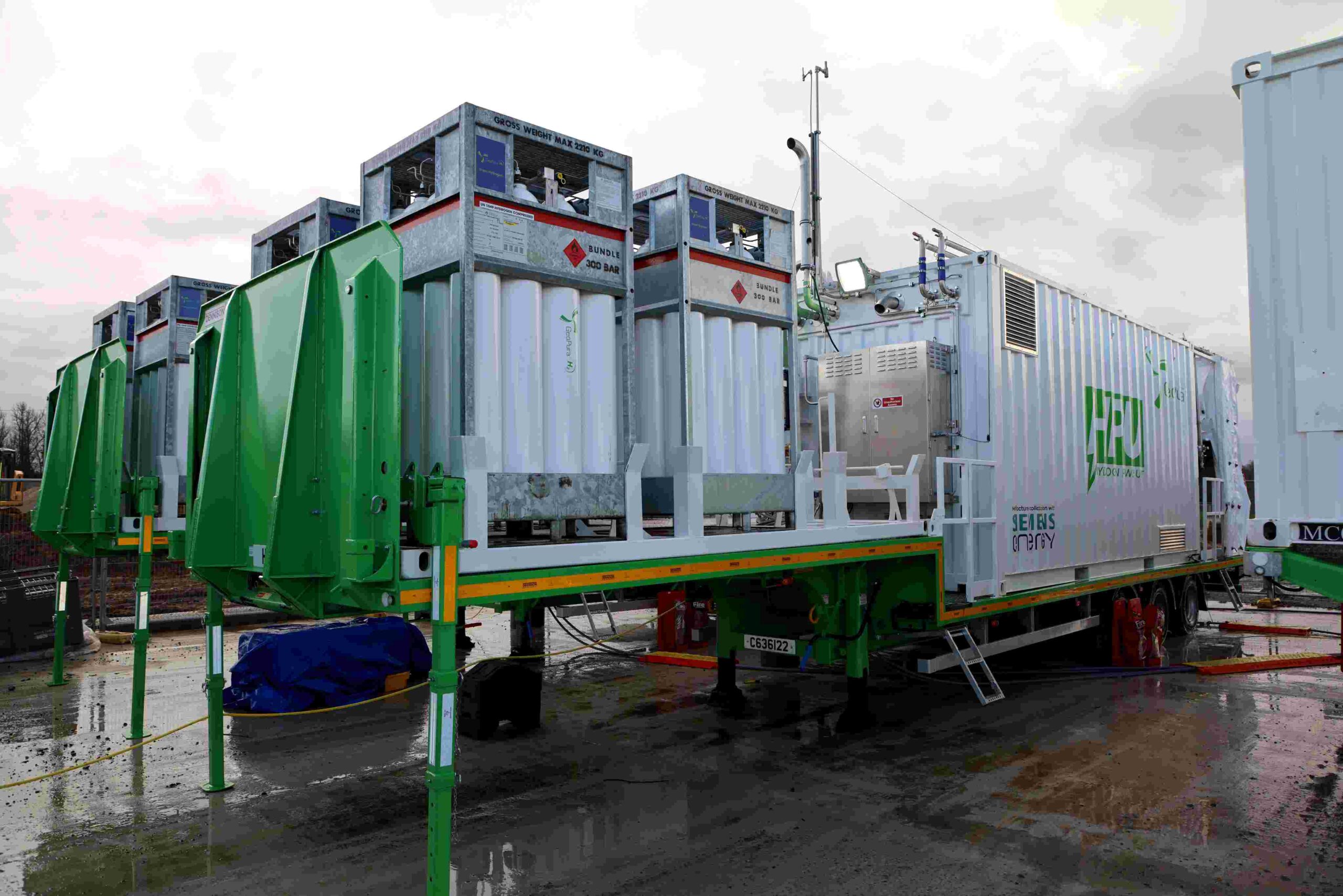
British hydrogen innovator GeoPura will supply the largest volume of green hydrogen ever produced for a UK construction project.
The Lower Thames Crossing project near London will be the first major British infrastructure project to be carbon neutral in construction, according to GeoPura and National Highways, the road agency for England. A key part of this is replacing diesel with hydrogen, electric and other low-carbon fuels. Unlike diesel, hydrogen only emits water vapour when used in a fuel cell, dramatically reducing greenhouse gas emissions.
The Lower Thames Crossing is a planned road tunnel that will tackle traffic congestion on the Dartford Crossing over the River Thames just south of London and create a new link between the ports of England’s south east coast with the inland areas of the Midlands and northern England. The project received planning permission in March last year when the UK government committed the final part of public funding that will enable the private sector to take forward construction and long-term operation of the new road.
The bores for the twin tube tunnel will be driven using TBMs, which are electric. Similarly, much of the earthmoving and finishing work for the project will be carried out using electric machines. However, some of the equipment used for the project will be hydrogen-fuelled.
GeoPura will supply 2,500 tonnes of hydrogen to the project, enough to replace over 12 million litres of diesel and save an estimated 30,000 tonnes of CO₂ emissions. The hydrogen will be supplied as a managed service, which includes the delivery, storage and distribution to equipment on site during the main construction phase of the project.
Six hydrogen-powered generators provided by GeoPura are already at work on the project, charging batteries used in electric machinery on a work site with zero emissions. GeoPura said that a hydrogen-fueled excavator, made by JCB, became the first such machine to be deployed outside a test environment anywhere in the world when it was used to carry out survey work on the project last year.
GeoPura, set up in 2019, produces green hydrogen across several locations in the UK using electrolysis powered by locally sourced renewable electricity. This includes at its flagship HyMarnham Power facility in Nottinghamshire county, on the site of a former coal-fired power station. Andrew Cunningham, chief executive of GeoPura, said the contract with the project is “setting a powerful example of how major infrastructure can be delivered sustainably”.
Enhancing hydrogen production capacity is a key part of the UK government’s plans to increase energy security by reducing reliance on imported fuel sources that are vulnerable to supply disruption. Chris McDonald, the minister for industry, said GeoPura and the Lower Thames Crossing collaboration is proof that clean energy goes hand-in-hand with major British infrastructure projects. “Hydrogen has a key role to play in our industrial strategy and from Nottinghamshire to Kent, our first flagship hydrogen projects will sustainably power projects up and down the country.”
Matt Palmer, executive director for the Lower Thames Crossing, said that by replacing diesel with UK-produced hydrogen, “we’re not only reducing our own carbon footprint but also helping clean up the construction sector”.
The project is needed as the existing Dartford Crossing, with its twin tunnels and bridge suffers heavy congestion, and delays are very frequent. Minor crashes or the need to use the larger diameter tunnel for large loads can result in long tailbacks. The route is a key transport artery for goods being transported to and from the UK and is of prime economic importance to the UK as a whole.
For more information about the Lower Thames Crossing,click here.